Duty review
We compare rated voltage, load current, poles, frequency and available fault current with the proposed frame and interrupting capacity. Ambient temperature and enclosure constraints are called out when they may require derating.
Selection support starts with the actual distribution system: nominal voltage, continuous load, available fault current, conductor arrangement, enclosure conditions and the coordination objective. We turn those inputs into a focused review package for engineers, panel builders and procurement teams.
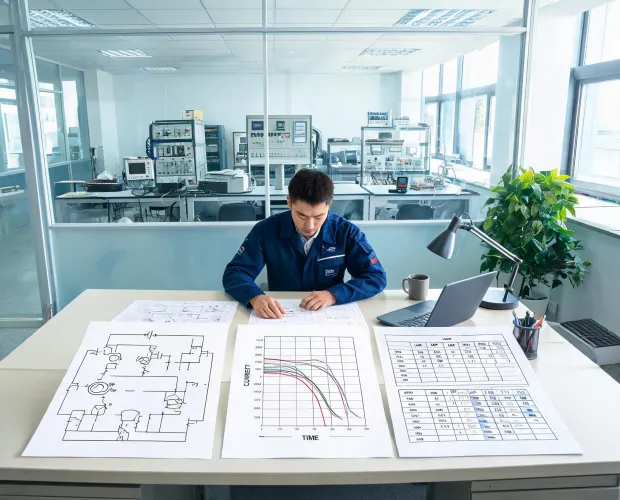
We compare rated voltage, load current, poles, frequency and available fault current with the proposed frame and interrupting capacity. Ambient temperature and enclosure constraints are called out when they may require derating.
Protection engineers examine upstream and downstream devices, trip curves and selectivity objectives. The output identifies assumptions that require a formal study rather than presenting coordination as an unsupported product claim.
Auxiliary contacts, shunt trips, undervoltage releases, interlocks and lockout devices are checked against series, mounting method and coil voltage. This reduces late substitutions and panel rework.
A concise comparison of electrical ratings, protection functions and mounting constraints.
Series-specific documentation references for the exact products under consideration.
Applicable standards and market requirements recorded by product family, never generalized.
Send the electrical inputs that govern the selection.
Talk to an EngineerCombine part numbers, accessories and quantities for review.