Application stories

Abb Circuit Breaker protection across changing loads

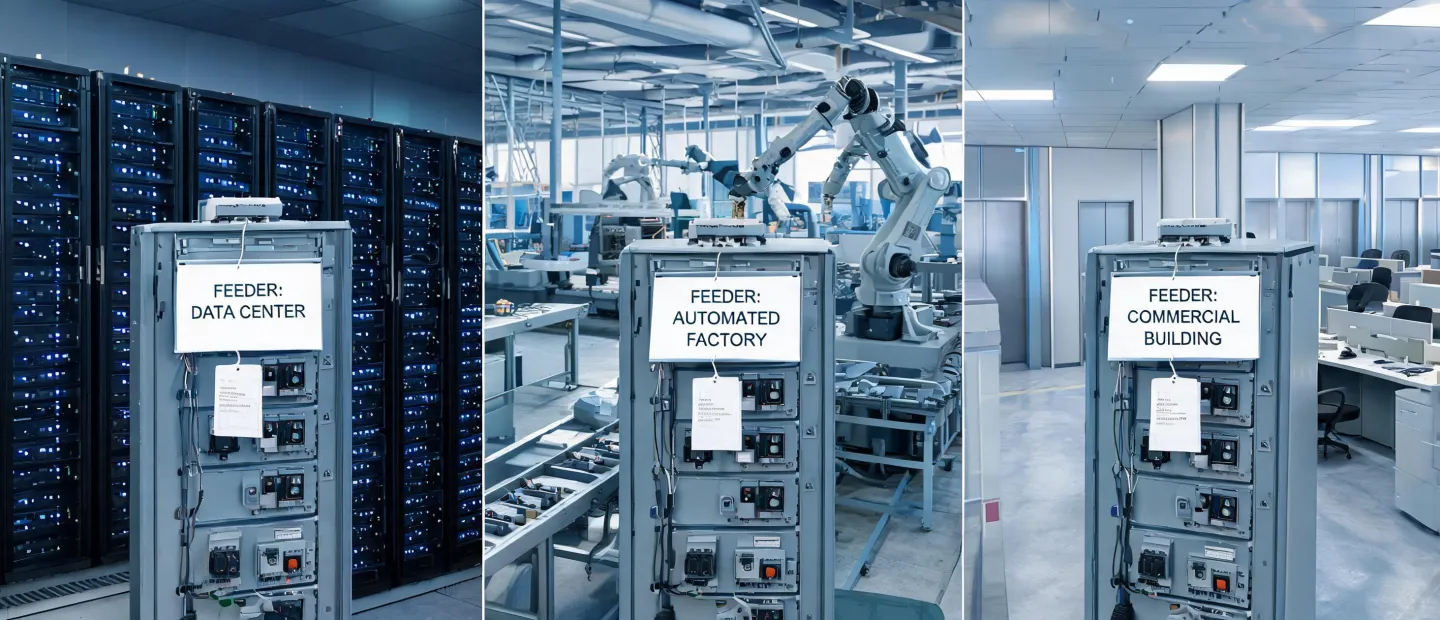
Every facility produces a different protection problem. Duty cycle, continuity targets, expansion plans and maintenance access influence the useful choice. Explore how the same rating vocabulary leads to different engineering priorities across critical-power, industrial and commercial systems.

Modern electrical distribution systems across industrial facilities

Four operating environments, four decision paths

01 / DATA CENTERS

Protecting concurrent maintenance

Critical-power teams often prioritize selective coordination, serviceable main devices and clear status information. We focus the discussion on fault duty, redundancy boundaries and the maintenance sequence—not merely the continuous ampere rating.

02 / OEM MACHINERY

Raising panel SCCR deliberately

Machine builders need compact protective devices that fit the enclosure and support the declared assembly SCCR. Component combinations, branch protection and control-voltage accessories are reviewed together before a repeatable bill of material is released.

03 / COMMERCIAL BUILDINGS

Balancing access and continuity

Building distribution calls for practical isolation, expansion capacity and understandable maintenance planning. Feeder hierarchy and trip settings are organized so facility teams inherit usable records rather than an unexplained device schedule.

04 / UTILITIES

Documenting feeder boundaries

Utility and infrastructure buyers expect traceable ratings and disciplined interfaces. We align protection inputs, installation conditions and document references so technical evaluation and procurement review share the same basis.
TRANSFORMATION CASES

Digital context changes maintenance decisions

Before

Calendar-only inspection

Service intervals are set without operating context, creating unnecessary interventions or missed stress indicators.

After: event and condition records support a targeted inspection plan.
Before

Disconnected trip settings

Device settings live separately from the approved coordination assumptions and are difficult to audit.

After: settings, study references and asset identity remain linked.
Before

Reactive accessory replacement

Control voltage and family compatibility are rediscovered only after a maintenance event.

After: accessory records enable prepared, series-specific service kits.

Map protection priorities to your facility

Tell us where continuity, fault isolation, monitoring and maintenance access carry the most weight.

Discuss an Application